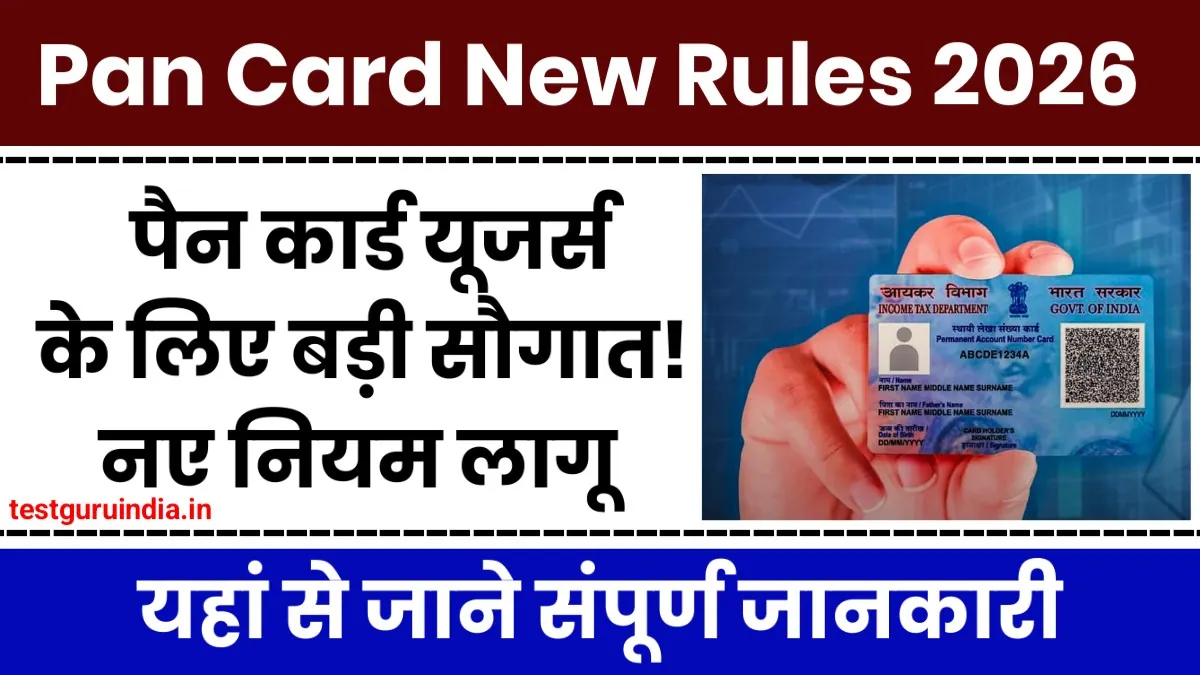

In 2026, the Government of India is planning to update several PAN card rules to make financial transactions easier and more transparent. These changes are mainly focused on reducing unnecessary paperwork for small transactions while keeping strict monitoring on high-value deals. If you use your PAN card for banking, property purchase, insurance, or vehicle buying, these new rules can directly affect you. Here is the complete and simple breakdown you should know.
| Transaction Type | Old Limit | New Limit 2026 |
|---|---|---|
| Cash Transaction | ₹50,000/day | ₹10 Lakh/year |
| Vehicle Purchase | All Vehicles | ₹5 Lakh & Above |
| Property Deal | ₹10 Lakh | ₹20 Lakh |
| Hotel Bills | ₹50,000 | ₹1 Lakh |
As per updates under the Income Tax Department, regulated by the Government of India.
Official Website: https://www.incometax.gov.in
Change in Cash Transaction Rules
One of the biggest reliefs for common people is in cash deposit and withdrawal rules. Earlier, if someone deposited or withdrew more than 50,000 rupees in a single day, PAN was compulsory. Under the proposed 2026 changes, PAN will only be required if total annual cash transactions cross 10 lakh rupees. This reduces pressure on small account holders and daily business owners. It will also decrease unnecessary compliance for normal banking users. However, large cash movements will still be tracked strictly to prevent tax evasion and black money activities.
Change in Property Transaction Limit
Property buyers and sellers will also benefit from the revised limits. Earlier, PAN was mandatory for property deals above 10 lakh rupees. Now, the limit is proposed to increase to 20 lakh rupees. This change mainly supports people buying small houses or plots in semi-urban and rural areas. It reduces documentation stress for lower-value property deals. But for high-value real estate transactions, PAN will remain compulsory. The government aims to balance convenience for middle-class buyers while maintaining transparency in big property investments.
Update for Vehicle Purchases
Another major update applies to vehicle purchases. Earlier, PAN was required for almost every car purchase. Under the new 2026 proposal, PAN will be necessary only if the vehicle cost exceeds 5 lakh rupees. This is helpful for two-wheeler buyers and small car customers. It simplifies the buying process and reduces extra paperwork at dealerships. However, luxury and premium vehicle buyers will still need to provide PAN details. The rule ensures that high-value automobile transactions remain under proper financial monitoring.
Rule for Hotel and Large Payments
Spending in hotels, restaurants, or event bookings has also seen a revised limit. Previously, PAN was required for bills above 50,000 rupees. Now the threshold may increase to 1 lakh rupees. This gives flexibility to families organizing weddings or big functions. Small and mid-range hospitality expenses will not require immediate PAN submission. Still, very high bills will remain under reporting guidelines. The government wants to simplify lifestyle expenses while ensuring transparency in high-value financial activities.
PAN Aadhaar Linking Requirement
PAN-Aadhaar linking remains one of the most critical requirements. If your PAN is not linked with Aadhaar, it can become inoperative. An inactive PAN means you cannot file Income Tax Returns, open bank accounts smoothly, or receive tax refunds. The Income Tax Department has clearly emphasized that linking is mandatory. Even with relaxed transaction limits, compliance with Aadhaar linking is non-negotiable. Users should immediately verify their linking status through the official portal and complete the process to avoid future financial complications.
Conclusion
The PAN Card New Rules 2026 aim to provide relief in small transactions while keeping strict control over high-value financial activities. These changes reduce paperwork for common users but maintain transparency in major deals. Always follow official updates and ensure your PAN is active and linked properly.